
In an era where construction industrialization and green building concepts are deeply integrated, structural steel has emerged as a core material in modern architecture, thanks to its superior performance and systematic advantages. This material, combining high strength, flexibility, and sustainability, has not only revolutionized the construction logic of traditional buildings but also opened up new possibilities in efficiency, environmental protection, and design freedom. This article explores the core strengths, application values, and practical considerations of structural steel, deciphering why it has become the “skeletal backbone” of contemporary architecture.
Part 1: The Core Advantages of Structural Steel – Redefining the Value of Building Materials
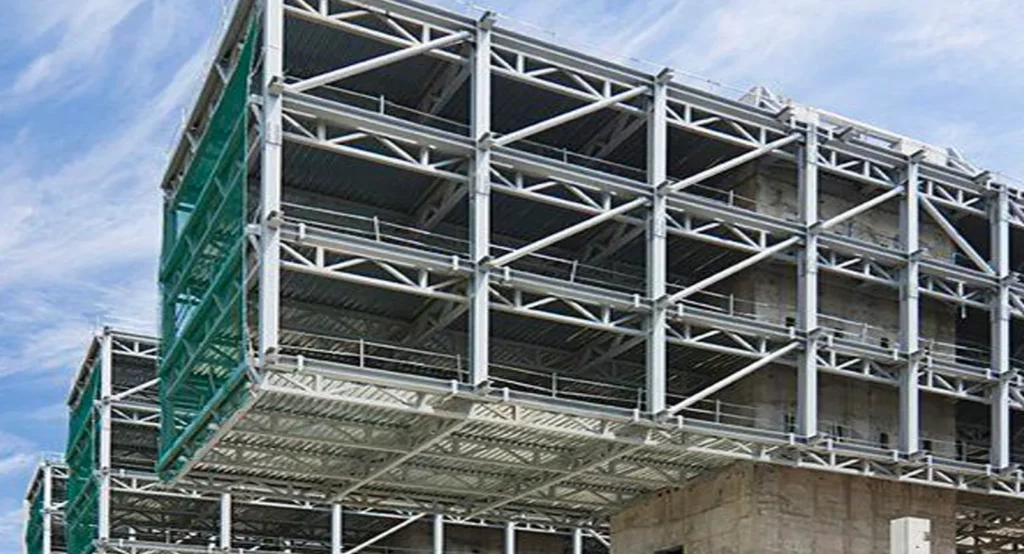
The unique appeal of structural steel stems first from its exceptional strength-to-weight ratio, far surpassing that of traditional materials. At the same strength level, steel is only one-third the weight of concrete, masonry, or other conventional materials. This “light yet strong” characteristic allows buildings to achieve higher load-bearing capacity while significantly reducing foundation loads, laying the material foundation for long-span and super-high-rise structures. More importantly, steel can be prefabricated using high-precision automated equipment, transforming the “crude on-site construction” of traditional methods into factory-based “precision manufacturing,” enhancing the industrialization level of construction from the ground up.
Part 2: Why Choose Structural Steel? Five Core Values Empowering the Full Construction Cycle
- Productivity Surge: From “Mass Labor” to “Precision Manufacturing”
Prefabricated construction is the key to unlocking structural steel’s efficiency. By completing the processing and assembly of steel components in factories, on-site construction cycles can be shortened by 30%-40%, with labor requirements reduced by over 20%. This “off-site manufacturing + on-site assembly” model not only mitigates the impact of external factors like weather and site conditions on project schedules but also makes construction as efficient and controllable as “building with blocks,” especially suitable for large-scale projects such as commercial complexes and industrial plants. - Design Freedom: The “Magic” Breaking Spatial Constraints
The mechanical properties of steel grant architects unprecedented creative latitude. Its excellent tensile and compressive strengths enable column-free spaces spanning over 30 meters (e.g., stadiums, airport terminals), eliminating the need for load-bearing walls or intermediate columns and allowing more flexible and open interior layouts. For example, a commercial center used steel’s long-span design to create a 50m×80m column-free atrium, meeting the openness requirements of commercial spaces while enhancing architectural aesthetics through smooth structural lines. - Environmentally Friendly Construction: From “Dusty Chaos” to “Green Building”
The “low-pollution” nature of steel construction aligns with modern urban demands for civilized construction. With over 80% of work completed in factories, on-site welding and cutting are drastically reduced, cutting dust emissions by 60% and noise pollution by 40%, significantly improving the surrounding environment during construction. This advantage is particularly crucial in sensitive areas such as urban cores and residential districts, effectively balancing construction progress and social impact. - Upgraded Quality Control: From “Experience-Driven” to “Standard-Driven”
Factory production ensures that steel components are processed to millimeter-level precision, with welding quality and surface treatment completed in controlled environments with constant temperature and humidity, strictly adhering to international standards like ISO and AWS. This “standardized manufacturing” virtually eliminates human errors in on-site construction, achieving a component qualification rate of over 99% and drastically reducing rework waste, providing a reliable guarantee for high-quality buildings. - Environmental Sustainability: From “Resource Consumption” to “Circular Economy”
Structural steel is a benchmark for the “green revolution” in construction. Its production consumes 30% less energy than concrete, and carbon emissions during construction are reduced by 25%. More importantly, steel is 100% recyclable: after demolition, over 95% of steel components can be directly recycled and remade, far higher than concrete (only 50% recyclable). This feature makes it a “plus point” in certification systems like LEED and China’s Green Building Standards, helping projects achieve low-carbon goals.
Part 3: Three Key Considerations for Using Structural Steel – Details Determine Success
- Corrosion Protection: Armor for Steel Structures
The vulnerability of steel to environmental corrosion makes anti-corrosion treatment paramount. Common methods include:- Barrier Protection: Hot-dip galvanizing (coating thickness ≥85μm, lifespan over 50 years) and epoxy zinc-rich primer with fluorocarbon topcoat (suitable for high-corrosion environments like marine or chemical sites);
- Cathodic Protection: Attaching sacrificial anodes like zinc or magnesium to component surfaces to slow corrosion through electrochemical principles.
A cross-sea bridge project used “galvanizing + coating” dual protection to extend the steel structure’s lifespan from 30 years in ordinary environments to 70 years, demonstrating the importance of anti-corrosion measures.
- Floor Vibration Control: Balancing “Lightness” and “Comfort”
The lightweight nature of steel structures reduces structural damping, potentially causing low-frequency vibrations from human activities (e.g., running in offices) or equipment operation (e.g., HVAC systems). Solutions include:- Structural Design Optimization: Increasing floor stiffness (e.g., using composite slabs or adding dampers);
- Dynamic Simulation Analysis: Using software like ABAQUS to simulate vibration responses and avoid resonance risks in advance.
An office building project introduced vibration analysis during the design phase, adjusting beam spacing and floor thickness to control vibration acceleration below 0.05g, meeting ISO comfort standards for office environments.
- Site Management: From “Rough Construction” to “Precision Coordination”
The efficiency of steel construction relies on end-to-end refined management:- Component Delivery: Using BIM technology for detailed design to precisely control component dimensions and installation sequences, achieving “zero inventory” management;
- Installation Precision: Using total stations and 3D scanners for real-time positioning monitoring, controlling deviations within 3mm;
- Process Innovation: Promoting “modular installation platforms,” such as a project using liftable scaffolding to increase high-altitude work efficiency by 50% while reducing safety risks.
Part 4: Future Prospects: The Boundless Potential of Structural Steel
As construction industrialization and intelligence advance, structural steel is deeply integrating with emerging technologies:
- Digitalization: Using QR codes and RFID chips for full-life-cycle tracking of components, building “digital twin” models of steel structures;
- High-Performance Materials: Developing fire- and weather-resistant steel (e.g., Q345GJ) to reduce reliance on fireproof coatings and enhance structural safety;
- Expanded Applications: In prefabricated buildings, modular structures, and emergency temporary facilities, the rapid assembly advantages of steel will be further unleashed.
Conclusion
The rise of structural steel represents not just a material upgrade but a revolution in construction thinking. Its “lightweight, efficient, green” characteristics address contemporary society’s multiple demands for construction speed, quality, and sustainability. However, maximizing its value depends on scientific design, strict craftsmanship, and refined management. When the “industrial rationality” of steel merges with the “humanistic warmth” of architecture, we are entering an era where “buildings are constructed like cars” – and structural steel is the cornerstone of this era.
Against the backdrop of “double carbon” goals and accelerated urbanization, the application potential of structural steel is far from exhausted. It is not just the “skeleton” of buildings but the “engine” driving industry transformation, leading us toward a more efficient, greener, and freer architectural future.
